Khadka, S. & Pandey, S. B. (2023). Professionalizing multimodal composition. Logan, UT: Utah State University Press. https://rb.gy/k8zbn
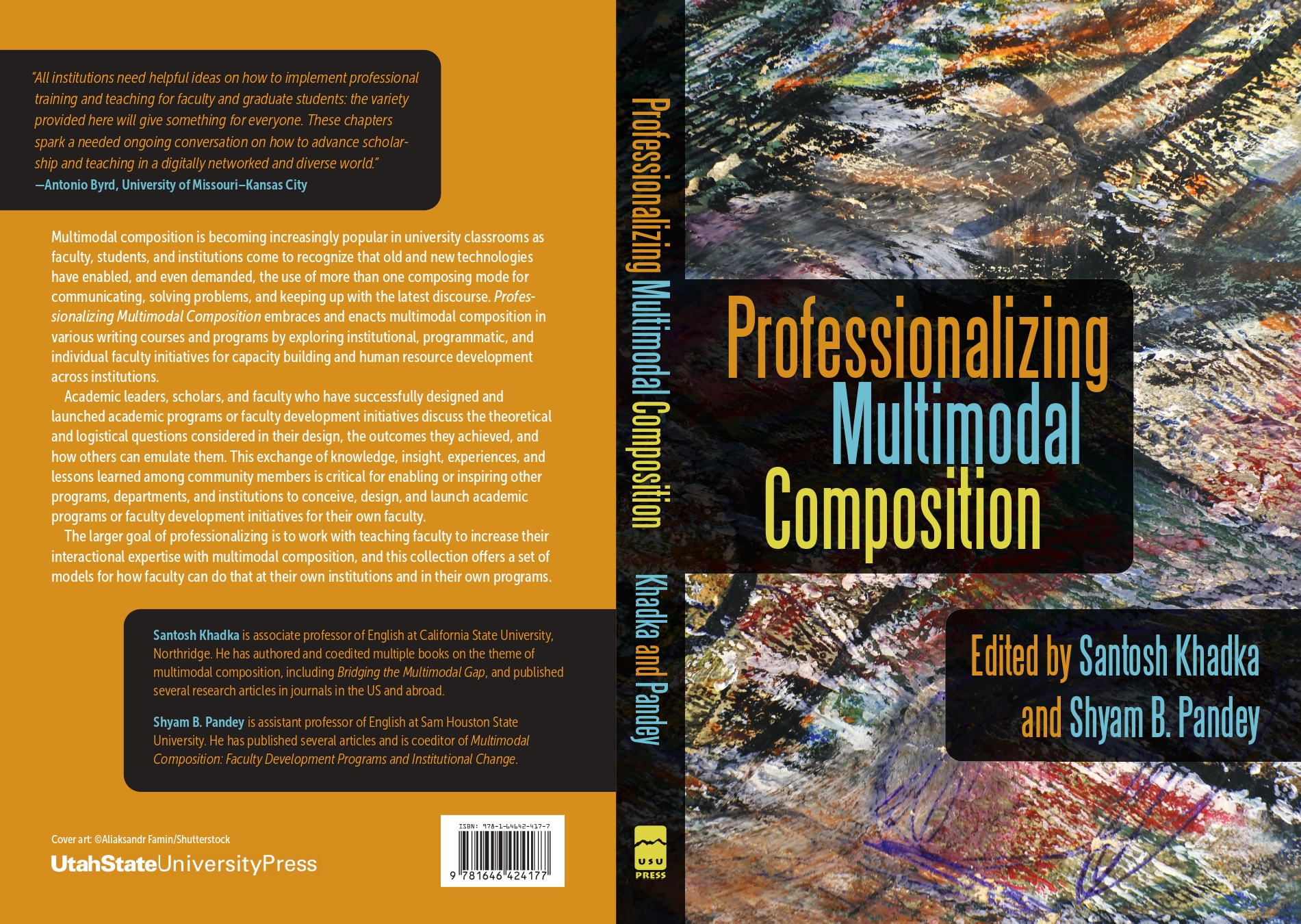 This edited collection brings together some of the implementation perspectives and practices of multimodal composition in various contexts and programs by discussing writing faculty preparedness in undertaking multimodal/digital composition at different levels of higher education. With a primary focus on professionalizing multimodal composition, this collection explores the individual faculty and programmatic as well as institutional initiatives to human resource development to embrace and enact multimodal composition in various writing courses and programs. Additionally, this edited collection responds to the increasing interest in multimodal curricular and programmatic transformation in terms of continuing professional development opportunities for faculty, and institutional and faculty initiatives to integrate multimodality into the curriculum within and across the disciplines. This collection is highly contingent given the change in digital media and technology landscapes in the last few years.
This edited collection brings together some of the implementation perspectives and practices of multimodal composition in various contexts and programs by discussing writing faculty preparedness in undertaking multimodal/digital composition at different levels of higher education. With a primary focus on professionalizing multimodal composition, this collection explores the individual faculty and programmatic as well as institutional initiatives to human resource development to embrace and enact multimodal composition in various writing courses and programs. Additionally, this edited collection responds to the increasing interest in multimodal curricular and programmatic transformation in terms of continuing professional development opportunities for faculty, and institutional and faculty initiatives to integrate multimodality into the curriculum within and across the disciplines. This collection is highly contingent given the change in digital media and technology landscapes in the last few years.
Pandey, S. B. (2022). Transnational Technical and Business Communication Writers in Making of a Multimodal Career Portfolio. In Proceedings of the 87th Association for Business Communication (ABC) Annual International Conference. 177-179. ISSN 2472-0658. https://tinyurl.com/bde87s2b
Pandey, S. B. (2021). Languaging in first-year composition: Multilingual college writers’ language practices in research writing process. Journal of Global Literacies, Technologies, and Emerging Pedagogies, 7(2). https://tinyurl.com/yknh9jz5
Pandey, S. B. & Chen, J. (2021) Is Facebook easier to use than WeChat? A critical comparative analysis of interface features of WeChat and Facebook. In Proceedings of the 39th ACM International Conference on the Design of Communication (pp. 213–223). DOI: https://doi.org/10.1145/3472714.3473644 Utilizing Sun’s (2012; 2020) “culturally localized user experience” (CLUE) framework, this study employs content analysis and critical discourse analysis to investigate the defining features of Facebook and WeChat guided by the following research questions. 1) What makes Facebook and WeChat different in terms of their respective unique design elements/ functionalities? 2) What are the culturally specific design factors revealed in these features and functionalities? 3) How do these features reveal the design considerations such as agency, technology, identity, values, ideology, structure, power, dominance, and cultural logic (Sun, 2020, p. 10-14)? The preliminary findings reveal cultural and local differences are the driving force for the unique infrastructure features of the two social media and highlight for “glocalization” (mixing forces into local elements) in social media design (Agboka, 2013; Sun & Getto, 2017; Sun, 2020).
Pandey, S. B. & Khadka, S. (2021). Multimodal composition: Faculty development programs and institutional change. New York, NY: Routledge. https://bit.ly/3nM5alE This book presents an array of chapters that underscore the role of institutional faculty development programs and individual faculty initiatives in making the multimodal curricula and pedagogies global within and across programs and disciplines in diverse
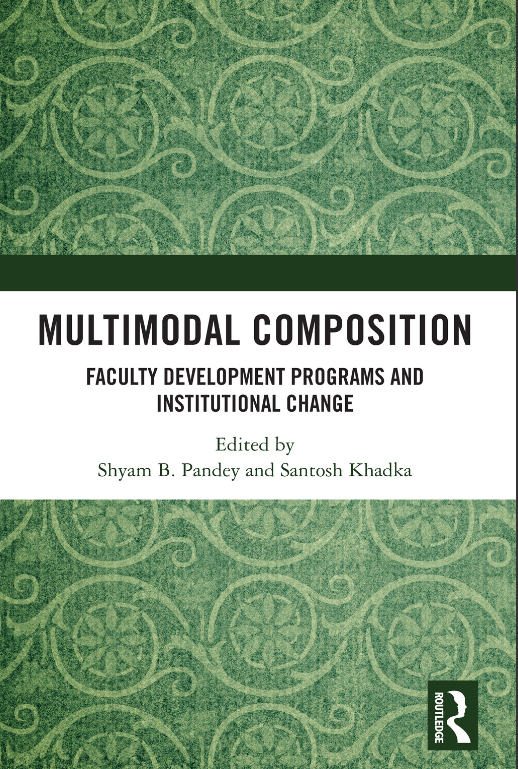 educational contexts. Through concrete discussion of numerous effective faculty development programs and some unique initiatives of individual faculty members across institutions to develop and implement multimodal courses, programs, and pedagogies in a wider scale, this collection takes the conversations about designing and implementing multimodal curricula, programs, and pedagogies to a next level. As such, the primary objective of this book is to further faculty and administrators’ ability to transform multimodal curricula and pedagogies by bringing together institutional faculty development programs and individual faculty initiatives within and across the disciplines.
Pandey, S. B., Ding, A. & Khadka, S. (2021). Special Issue on Multimodal Composition in Multilingual Contexts. Journal of Global Literacies, Technologies and Emerging Pedagogies, 7(1). http://jogltep.com/published-issues/ Currently, I’m co-editing a special issue on Multimodal Composition in Multilingual Contexts for a peer-reviewed journal, Journal of Global Literacies, Technologies, and Emerging Pedagogies. In this issue, we have a variety of contributions that examine the intersectionality between/among multimodal composition and/or multilingual writers, digital technologies, emerging media, second/foreign language teaching contexts, professional development of faculty, and so on. This special issue contributes to providing new perspectives on multimodality viewing through multiple contextual details, especially varied multilingual contexts.
Henderson Lee, S., & Pandey, S. B. (2020). Introducing world Englishes to multilingual writers in a first-year composition course. In K. Cole & H. Hassel (Eds.), Transformations: Change Work Across Writing Programs, and Practices. Logan, UT: Utah State University Press. https://upcolorado.com/utah-state-university-press/item/4064-transformations
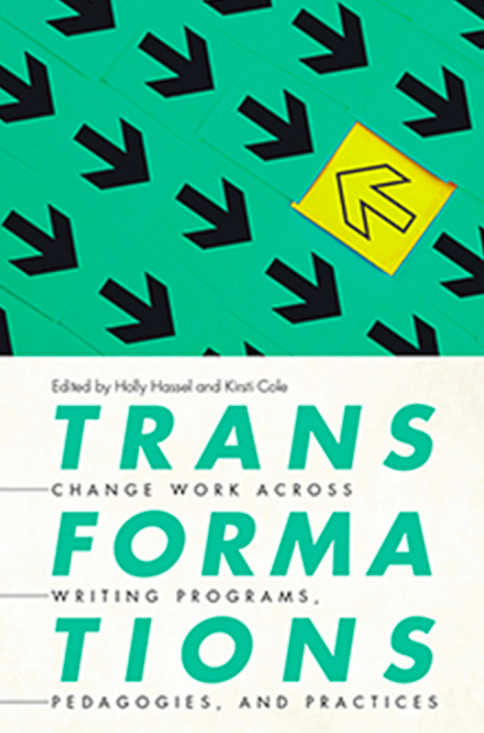 To better prepare students for writing in the era of globalization, we adopted the following principles of Matsuda and Matsuda (2010) in their Spring 2016 teaching of a first-year composition class for multilingual writers: (1) Teach the dominant language forms and functions; (2) Teach the nondominant language forms and functions; (3) Teach the boundary between what works and what does not; (4) Teach the principles and strategies of discourse negotiation; and (5) Teach the risks involved in using deviation features. World Englishes texts were incorporated into the course curriculum to fully achieve these principles, and the following guiding question was asked: How do multilingual writers perceive World Englishes texts in relation to their own academic English writing development? To answer this question pre/post language belief questionnaires, post World Englishes reading questionnaires, and World Englishes reading/academic writing reflections were collected during the semester. Recursive content analysis of all data highlighted four stages through which multilingual writers’ perceptions of World Englishes in the writing classroom move: resistance, curiosity, acceptance, and resource.
Henderson Lee, S., & Pandey, S. B. (2020). Writing pedagogy and practice in South Asia: A case of English language teachers and teacher trainers in Nepal. In L. Seloni & S. Henderson Lee (Eds.), Second language writing instruction in international contexts: Language teacher preparation and development. Bristol, UK: Multilingual Matters. https://multilingual-matters.com/page/detail/?k=9781788925860 This project highlights one of the South Asian writing contexts, Nepal by detailing a qualitative study of secondary, and post-secondary English teachers and teacher trainers ‘ experiences with multilingual writing instruction in the culturally and linguistically diverse contexts of Nepal.
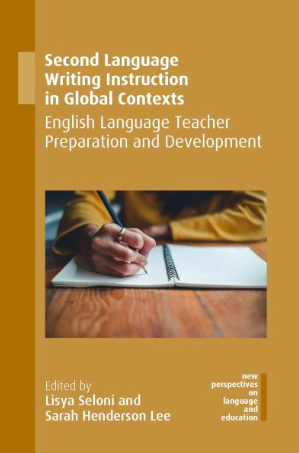 After discussing the country’s current state of English language teaching, including teacher education specific to the teaching of writing, it reports the findings in the areas of teacher preparation and continued development, classroom successes and challenges, and resources and support systems. We argue that the disconnect between pre-service training and in-service practice, the top-down approach to professional development, and other logistical constraints such as classroom space and students’ varied linguistics abilities hamper motivated teachers’ professional development in L2 writing and call for more local collaboration between teachers and trainers.
Pandey, S. B. (2020). English in Nepal. Journal of World Englishes, 39(3), 500-513. https://tinyurl.com/22u38abw
This paper presents a sociolinguistic profile of contemporary Nepal, with particular reference to the status and functions of English in Nepali society. Nepal has been said to belong to the Expanding Circle, as English has traditionally had no official status there, although the language has been playing significant economic, educational, and social roles in society, in a similar fashion to an Outer Circle variety of English. The use of English has increasingly spread in various domains of society, including education. This paper begins by providing an overview of Nepal and its cultural, linguistic and social dynamics, and by discussing the history of English in Nepal from the 17th century to date. It then proceeds to discuss the users and uses of English in contemporary society, documenting how the interpersonal, instrumental, administrative, and creative/innovative functions, along with linguistic adaptation and innovation, are manifested in society.
Henderson Lee, S., Ayoma, R., Harris-Hoffman, C., Maya, A., and Pandey, S. B. (2019). L2 literacies across global contexts: Applications of emerging teacher-scholars. MinneTESOL Journal, 35(1), 1-10. This short paper highlights the voices of four recent MA graduates as emerging second language (L2) literacy teacher-scholars. In my Fall 2015 graduate seminar, Second Language Literacy, the teacher-scholars, who are co-authors here (Ryosuke, Charlotte, Alejandro, and Shyam), developed as language teachers who understand literacy as situated social practice, which is informed by users’ socially and historically constructed identities (Gee, 2015), and who consciously and systematically reflected on their L2 literacy teaching for positive change (Farrell, 2007). In this graduate classroom context, they explored critical readings, interactive discussions, content applications, and individual reflections. Now, as doctoral students and full-time teachers, they continue to engage in L2 literacy reflection with each other and their former adviser (Sarah) through a critical friendship, or teacher collaboration “which encourages talking with, questioning, and even confronting, the trusted other, in order to examine planning for teaching, implementation, and its evaluation” (Hatton & Smith, 1995, p. 41). The reflective snapshots shared in this paper stem from the teacher-scholars’ collaborative exploration of L2 literacy as social practice across four unique teaching contexts.
Henderson Lee, S., Ayoma, R., Harris-Hoffman, C., Maya, A., and Pandey, S. B. (2019). L2 literacies across global contexts: Applications of emerging teacher-scholars. MinneTESOL Journal, 35(1), 1-10. This short paper highlights the voices of four recent MA graduates as emerging second language (L2) literacy teacher-scholars. In my Fall 2015 graduate seminar, Second Language Literacy, the teacher-scholars, who are co-authors here (Ryosuke, Charlotte, Alejandro, and Shyam), developed as language teachers who understand literacy as situated social practice, which is informed by users’ socially and historically constructed identities (Gee, 2015), and who consciously and systematically reflected on their L2 literacy teaching for positive change (Farrell, 2007). In this graduate classroom context, they explored critical readings, interactive discussions, content applications, and individual reflections. Now, as doctoral students and full-time teachers, they continue to engage in L2 literacy reflection with each other and their former adviser (Sarah) through a critical friendship, or teacher collaboration “which encourages talking with, questioning, and even confronting, the trusted other, in order to examine planning for teaching, implementation, and its evaluation” (Hatton & Smith, 1995, p. 41). The reflective snapshots shared in this paper stem from the teacher-scholars’ collaborative exploration of L2 literacy as social practice across four unique teaching contexts.
 Shyam B. Pandey, Ph.D.